
Monday morning. Everyone’s on a call. Half the team looks half asleep. Sound familiar? That’s not a people problem. That’s an engagement problem. And Google Sites games might be the simplest fix nobody’s talking about.
Here’s the thing — work doesn’t have to feel like a grind. Teams that laugh together, compete together, and play together actually work better together. Google Sites games give you a practical, no-fuss way to make that happen without disrupting your workflow or spending a fortune on team retreats.
This guide covers everything. Which Google Sites games work best, how to set them up, and why they genuinely change team culture. No theory overload. Just real, useful information you can act on today.
What Are Google Sites Games and Why Teams Love Them
Understanding Google Sites Games in Context
Most people think of Google Sites as a basic website builder. Fair enough. But there’s a layer most teams never tap into — interactive games for Google Sites that sit right inside your workspace pages. No extra logins. No separate platforms. Just games embedded where your team already hangs out.
Google Sites features allow you to embed third-party tools, widgets, and applications directly into any page. That means a quiz, a puzzle, or a leaderboard challenge can live right next to your project updates and team announcements. People don’t have to go looking for fun. It finds them.
This matters more than it sounds. Games unblocked and fully accessible inside your existing platform remove every excuse not to engage. No IT restrictions. No blocked websites. No, “I couldn’t find it.” Everything lives inside Google Workspace, which your team already trusts and uses daily.
Google Sites applications work within your organisation’s existing security setup, too. Permissions stay consistent. Data doesn’t leave your ecosystem. For companies with strict compliance requirements, this is a genuine advantage over external gaming platforms.
Google Sites Games Google Sites Games Google Sites Games Google Sites Games Google Sites Games Google Sites Games Google Sites Games Google Sites Games Google Sites Games Google Sites Games Google Sites Games Google Sites Games Google Sites Games Google Sites Games Google Sites Games Google Sites Games Google Sites Games
The Psychology Behind Team Gaming
Nobody plays games because HR told them to. They play because games feel good. That feeling has a name — dopamine. When you win a round, solve a puzzle, or beat your personal best, your brain rewards you. That reward keeps you coming back.
Team-building games work on a deeper level, too. When colleagues play together, they see each other differently. The quiet analyst who never speaks in meetings might absolutely demolish everyone at trivia. The senior manager might struggle with a logic puzzle that the newest intern solves in 30 seconds. These moments matter. They humanise people. They flatten unnecessary hierarchy.
Collaborative gaming builds something that no team-building workshop can manufacture — a genuine shared experience. You can’t fake laughing together. You can’t manufacture the feeling of winning as a group. Games create those moments naturally, without anyone trying too hard.
Employee engagement games also build psychological safety. When people play together regularly, they become more comfortable around each other. That comfort transfers directly into better meetings, braver ideas, and more honest conversations.
Why Your Team Needs Virtual Team Games
Remote work is brilliant in many ways. But it quietly erodes something important — the casual human contact that holds teams together. The hallway chat. The lunch table conversation—the spontaneous laugh. Virtual team games deliberately rebuild that contact.
Online team games create synchronised shared experiences across distances. Two people playing the same game at the same time — even from different countries — experience something together. That synchronicity builds connection in a way that emails and project updates simply cannot.
Fun team activities also break the monotony that kills engagement in remote work. When every day looks identical — same desk, same schedule, same tasks — motivation quietly leaks away. A 15-minute game breaks the pattern. Energy returns. People remember why they actually like their colleagues.
Remote team activities through Google Sites work because they don’t ask people to change how they work. They fit inside existing rhythms. That low friction makes all the difference between something people actually use and something that dies after two weeks.
How to Add Google Sites Games to Your Workspace
Getting Started with Google Sites Customization
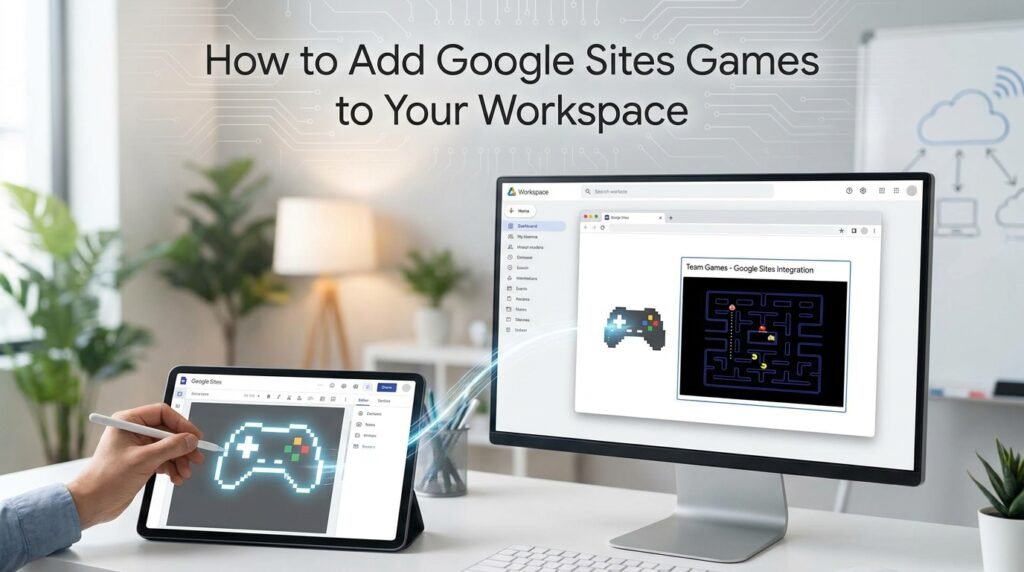
Adding games to your workspace takes less time than most people expect. You don’t need a developer. You don’t need technical knowledge. You need about 20 minutes and a Google account with editing access to your site.
Open your Google Sites dashboard. Choose the site where you want games to live. Click the edit button. On the right-hand panel, find the Insert menu. This is where Google Sites customization begins. Everything you embed into your pages starts here.
Think carefully about page placement before you do anything else. A game buried three clicks deep gets ignored. A game sitting on your main team hub page gets noticed. Visibility drives participation. Choose a prominent page — somewhere people land naturally during their workday.
Google Sites widgets appear inside the Insert menu. These are small embedded tools that load directly within your page. Some widgets are simple — a countdown timer, a poll. Others are interactive games with full scoring systems and leaderboards. Browse what’s available before committing to one option.
Finding and Installing Google Sites Plugins
Google Sites plugins are available in the Google Workspace Marketplace. Access it through the Insert menu on your site editor. The marketplace lists hundreds of vetted applications — games included.
Search specifically for what you want. Terms like “team quiz,” “trivia game,” “leaderboard challenge,” or “interactive puzzle” return relevant results. Read the descriptions carefully. Look at screenshots. Check how recently the plugin was updated — active maintenance signals a reliable product.
Reviews tell you everything. Real users leave honest feedback. They mention loading problems, scoring bugs, mobile issues, and the quality of customer support. A plugin with 400 reviews averaging four stars is almost always a safer choice than one with six reviews and no rating pattern.
Once you choose a plugin, installation is straightforward. Click install. Read the permissions it requests. These typically include access to your Google Site and permission to store user scores. If the permissions feel excessive for what the game does, that’s worth questioning. Otherwise, authorise and proceed.
Google Sites add-ons install within seconds. The game appears on your chosen page immediately after installation. Some games open a configuration panel automatically. Others need you to find settings manually. Either way, configuration comes next — and it matters enormously.
Configuring Your Games for Maximum Engagement
A poorly configured game kills engagement before it starts. Someone plays once, finds it confusing or broken, and never returns. Getting the configuration right is worth the extra 10 minutes.
Start with difficulty settings. Most interactive games for Google Sites offer easy, medium, and hard modes. Always start with easy or medium. The goal for a first launch is participation — not challenge. Once people are comfortable and engaged, they’ll push themselves toward harder settings.
Time limits shape the entire feel of a game. Short time limits create urgency and excitement. Long time limits feel leisurely and low-pressure. Neither is wrong — they just suit different game types and team cultures. A quick 5-minute trivia session fits perfectly into a work break. A 20-minute puzzle works better at the end of a Friday.
Scoring systems need careful thought. Public leaderboards energise competitive teams but can discourage quieter or less confident players. Team-based scoring levels the playing field. Personal best tracking motivates without creating social pressure. Match your scoring approach to your team’s actual personality — not the personality you wish they had.
Integration with Google Workspace Games
Google Workspace games connect with tools your team already uses. This integration turns a standalone game into part of your actual work culture.
Calendar sync means games appear on people’s schedules automatically. “Team Trivia — 15 mins” shows up on Friday afternoon. People plan around it. They look forward to it. Scheduled games beat spontaneous ones every time because consistency builds ritual.
Dashboard integration lets game scores and leaderboards sit alongside real work metrics. Someone opens the team page and sees project updates next to last week’s trivia champion. That side-by-side placement normalises gaming as part of team life — not a distraction from it.
Games that work with Google Workspace feel native rather than bolted on. That nativeness matters. People resist tools that feel foreign. They adopt tools that feel like natural extensions of what they already do.
Google Sites Games Google Sites Games Google Sites Games Google Sites Games Google Sites Games Google Sites Games Google Sites Games Google Sites Games Google Sites Games Google Sites Games Google Sites Games Google Sites Games Google Sites Games Google Sites Games Google Sites Games Google Sites Games Google Sites Games
Best Google Sites Games for Remote Team Building
Top-Performing Games for Distributed Teams
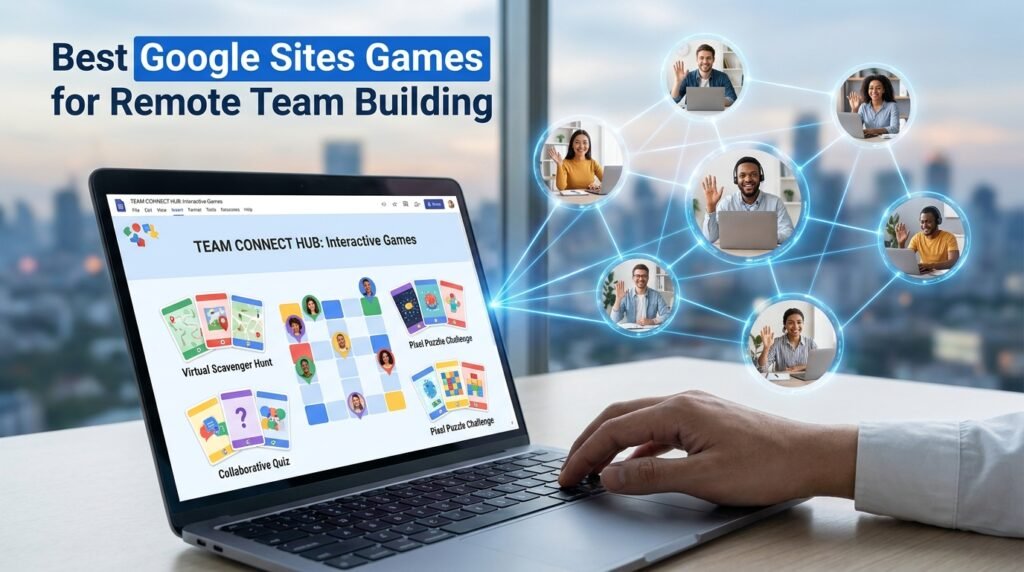
Some games consistently outperform others in remote team settings. These aren’t random picks — they’re categories that work because they’re accessible, quick, and naturally social.
Interactive Quiz Challenges top the list for good reason. Quizzes feel safe. There’s no physical coordination required. No artistic skill. No obscure knowledge advantage. Just questions and answers. Everyone starts equal. This accessibility drives participation across diverse teams.
Company-specific quizzes work particularly well. Questions about your organisation’s history, your team’s inside jokes, or your industry’s quirks create shared context. Someone new to the team learns the culture through the quiz itself. Someone long-tenured feels a sense of pride when they know the answers. Both outcomes serve the goals of workplace engagement tools.
Collaborative Puzzle Games work differently — and that difference is valuable. These games can’t be won alone. One person spots something another misses. Combining insights produces the solution. This mirrors actual project work in a way that individual competitive games don’t.
Playing these games reveals real communication patterns. Teams that talk over each other during puzzles often do the same in meetings. Teams that listen carefully during games collaborate better on actual projects. The game becomes a mirror — and sometimes what you see is genuinely useful feedback.
Trivia and Knowledge Games hit a sweet spot between serious and silly. They’re competitive without being physically demanding. They reward broad knowledge without punishing specialists. The random element — sometimes you just happen to know an obscure answer — keeps results unpredictable. Unpredictability keeps everyone engaged because anyone can win.
Leaderboard-Based Performance Games suit naturally competitive teams. Public rankings motivate people who thrive on recognition and achievement. The key is preventing one person from dominating indefinitely. Weekly score resets or rotating categories keep competition fresh and give everyone a genuine shot at the top spot.
Games for Asynchronous Participation
Time zones are the enemy of synchronous remote gaming. Asking your Singapore-based colleague to join a game at 9 am London time isn’t fair — it’s 5 pm their time, and they’re exhausted. Games for asynchronous team participation solve this without compromise.
Turn-based games work beautifully across time zones. Player one makes a move. Player two sees it hours later and responds. The game unfolds over days rather than minutes. Nobody needs to be online simultaneously. The challenge and connection remain intact despite the time gap.
Weekly challenge games work equally well. A puzzle or challenge opens Monday morning. Anyone on the team can attempt it at any time before Friday. Results compile at week’s end. This structure gives every time zone equal opportunity. It respects different work rhythms without abandoning the shared experience.
Ways to engage teams with Google Sites games asynchronously also reduce calendar pressure. You’re not adding another meeting. You’re adding a flexible touchpoint that people can engage with at their convenience. That flexibility dramatically increases actual participation rates.
Popular Games for Online Team Building Across Industries
Tech teams typically gravitate toward logic puzzles, coding challenges, and pattern-recognition games. They enjoy difficulty. They want to feel mentally stretched. Competitive leaderboards resonate strongly — these teams already track performance metrics obsessively.
Creative teams prefer open-ended games. Drawing challenges, storytelling games, and creative interpretation exercises. They want games that feel expressive rather than correct-or-incorrect. A game with one right answer bores them. A game with an infinite number of possible responses energises them.
Sales teams love anything competitive with visible rankings. They’re already motivated by targets and recognition. Games that replicate that structure — points, rankings, public acknowledgment of top performers — slot naturally into their existing motivation systems.
Operations teams often prefer collaborative formats. Their professional identity is built on teamwork and process. Games that reward collective success over individual achievement feel more aligned with how they see themselves and their work.
Google Sites Games That Boost Productivity and Morale
The Link Between Play and Performance
Taking time away from work to play games sounds counterproductive. It isn’t. The science on this is consistent and clear — mental breaks restore focus, and social breaks restore energy. Games that boost workplace morale deliver both simultaneously.
Human brains aren’t built for sustained focus. After roughly 90 minutes of concentrated work, attention starts fragmenting. Errors creep in. Creative thinking stalls. A break helps — but the type of break matters enormously. Scrolling social media provides a distraction without restoration. A game provides genuine cognitive recovery because it demands active engagement rather than passive consumption.
Making work fun with Google Sites games is strategic, not indulgent. You’re maintaining your team’s mental capacity across the full working day. You’re preventing the afternoon slump that costs organisations billions in lost productivity annually. A 10-minute game at 2 pm produces measurably better afternoon output than 10 minutes of email checking.
Mood effects ripple outward, too. Someone plays a quick game, laughs at something, feels a small but genuine lift. They return to their desk in a better mood. A better mood improves patience. Better patience improves communication. Better communication prevents conflict. A 10-minute investment prevents hours of difficult conversations down the line.
Games That Improve Team Collaboration
Certain games are specifically designed to require cooperation. You cannot win alone — the game mechanics make solo success impossible. Games to improve team collaboration, force communication, coordination, and trust in low-stakes environments.
Escape room-style challenges work exceptionally well here. Each player holds different information. Nobody has the complete picture alone. Solving the challenge requires sharing what you know, listening to what others know, and building a collective understanding. This is precisely what good project teamwork requires — and most teams never practice it explicitly.
These games also surface communication habits worth examining. Does one person dominate the conversation? Does someone stay silent despite having useful information? Does the group make decisions too quickly without exploring all options? Noticing these patterns during a game gives teams language to discuss them in real work contexts.
Google Sites game ideas for offices that emphasise collaboration consistently outperform competitive games in long-term engagement metrics. Why? Because collaborative games make everyone feel valuable. Competitive games create winners and losers. Collaborative games create shared victories — and shared victories build stronger teams.
Boosting Workplace Morale Through Entertainment Options
Morale isn’t just happiness. It’s commitment. High-morale employees stay longer, work harder without being asked, defend the organisation publicly, and bring their genuine best effort to problems. Games that boost workplace morale contribute directly to all of these outcomes.
Entertainment works through novelty. Identical days — same desk, same tasks, same conversations — gradually drain enthusiasm. Introducing games introduces variety. The day becomes slightly unpredictable. That unpredictability keeps brains alert and spirits higher.
Team bonding activities don’t need to be elaborate to work. Consistency beats sophistication every single time. A simple weekly game that runs reliably for a year builds more cultural connection than a spectacular one-off event. People need to count on the ritual. They need to know it’s coming. That dependability signals organisational care.
Improvements in morale also show up in retention data. People leave managers, not companies — the saying goes. But people also leave cultures that feel joyless. Fun team activities signal that the organisation values human experience alongside commercial output. That signal matters to people deciding whether to stay or go.
Productivity Games That Actually Matter
Some games teach skills while remaining genuinely entertaining. Productivity games at their best deliver both fun that builds real professional capability.
Language games improve communication skills across multilingual teams. Word association games sharpen clarity of expression. Storytelling games build narrative skills that transfer directly into presentations and client conversations. These benefits aren’t incidental — they’re built into the game mechanics.
Logic puzzles improve systematic thinking. Decision-making games build comfort with ambiguity and incomplete information. Time management games develop prioritisation instincts. None of these feels like training. They feel like playing. That distinction matters enormously for engagement.
Increasing engagement with Google Sites activities that double as skill-builders creates a compelling case for leadership investment. It’s not just fun — it’s development. That framing helps when you’re making the case internally for dedicating time to games during the workday.
Creating a Fun Workspace with Google Sites
Creating a fun workspace with Google Sites means treating games as infrastructure rather than entertainment extras. They’re part of how your team operates — not occasional treats.
Build games into onboarding. New team members who experience the team’s game culture in their first week integrate faster. They see personality. They meet colleagues in relaxed contexts. They feel like they belong before the formal introductions are even finished.
Rotate games seasonally. Fresh options prevent staleness. Bringing back popular games after a six-month break creates genuine excitement — “the trivia game is back!” It sounds small. It isn’t. These moments of anticipation build cultural texture.
Celebrate game achievements publicly. A mention in the team channel when someone sets a new record normalises games as part of team life. It signals that leadership pays attention. People feel seen. That feeling of being seen is one of the most powerful drivers of engagement for any manager.
Google Sites solutions for team connectivity work best when they’re embedded into existing rhythms rather than added on top of them. Games before team meetings. Games as Friday afternoon wind-downs. Games as Monday morning energisers. Find the natural slots and fill them consistently.
Common Mistakes When Setting Up Google Sites Games
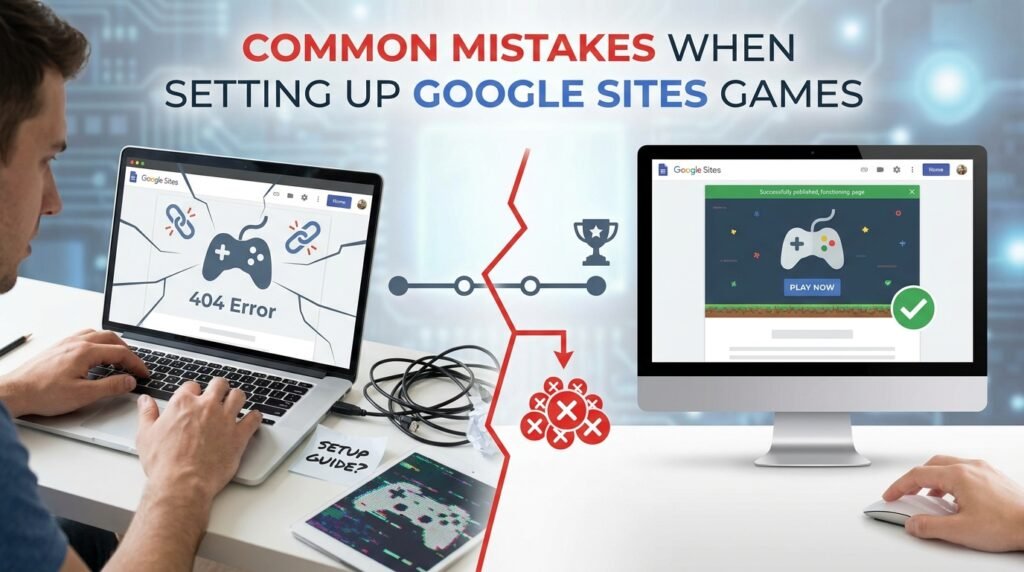
Mistake 1: Choosing Games No One Will Play
This kills more game initiatives than any technical problem. A leader chooses games they personally find interesting. Nobody else agrees. Participation withers. The initiative gets quietly abandoned.
Ask your team first. A three-question survey takes five minutes to create and saves weeks of wasted effort. What types of games appeal to you? How much time would you give a game during the workday? Do you prefer competing individually or working as a team? Those three questions give you enough data to make smart choices.
Best games for Google Sites teams aren’t universal — they’re specific to your team’s personality, preferences, and culture. A game that works brilliantly for a creative agency might completely miss with a legal team. Understanding your audience isn’t optional. It’s foundational.
Mistake 2: Neglecting Technical Setup
Games fail silently when technical issues go unaddressed. Someone tries to play, encounters a loading error, and leaves. They don’t report the problem. They just don’t come back. Meanwhile, participation data looks mysteriously low, and nobody understands why.
Test everything before launch. Play the game yourself on a desktop. Then on a mobile phone. Then on a tablet. Try different browsers — Chrome, Firefox, Safari, Edge. Check that scores save correctly. Verify that leaderboards display properly. Confirm that notifications are sent if that’s a feature.
Setting up interactive games on Google Sites properly means doing the boring verification work upfront. It’s not glamorous. But it’s the difference between a game initiative that actually works and one that silently dies.
Mistake 3: Forcing Participation
Mandatory fun is one of the most reliable ways to make people resent something they’d otherwise enjoy. The moment a game becomes compulsory, it stops being a game and becomes another obligation. Resistance is natural and understandable.
Keep participation genuinely optional. Invite, don’t mandate. Build enthusiasm organically by letting early adopters become internal advocates. When someone genuinely enjoys a game and tells their colleagues about it, that peer recommendation is worth more than any official announcement.
Google Sites games for remote workers land best when people choose them freely. That choice creates ownership. Ownership creates genuine engagement. Genuine engagement creates the cultural shift you’re actually after.
Mistake 4: Ignoring Inclusivity
Games that work for some people but exclude others do more harm than good and damage rather than build team culture. They create an in-group of enthusiastic players and an out-group of people who feel left out or unwelcome.
Consider accessibility in every game selection decision. Some team members may have visual impairments — high-contrast displays and screen-reader compatibility matter. Some may have motor difficulties — games requiring rapid clicking or precise mouse movement create unnecessary barriers. Some may be neurodivergent — timed, high-pressure games can feel genuinely distressing rather than exciting.
Free games for Google Sites that work across different needs and abilities do exist. They’re worth searching for. An inclusive game that everyone can participate in builds more connection than a brilliant game that excludes 20% of your team.
Language accessibility matters equally. Games with complex instructions or heavy reliance on idioms and wordplay disadvantage non-native English speakers. Keep game instructions plain and straightforward. Provide written instructions alongside any video or audio guidance.
Mistake 5: Not Measuring Impact
You invest time, energy, and possibly budget into Google Sites games. Six months later, do you know whether it worked? Without measurement, you’re operating on hope rather than insight.
Track participation numbers week by week. Is the trend growing, stable, or declining? Participation trends indicate whether games remain relevant.
Gather direct feedback regularly. A monthly three-question survey keeps you informed without burdening your team. What’s working? What isn’t? What would you like to try next? People’s answers shift over time — stay current with those shifts.
Watch qualitative signals too. Are people mentioning games in casual conversation? Do they ask when the next game is happening? Do new team members gravitate toward the game page quickly? These soft signals often reveal more than participation numbers alone.
Getting Started: Your Complete Google Sites Games Guide
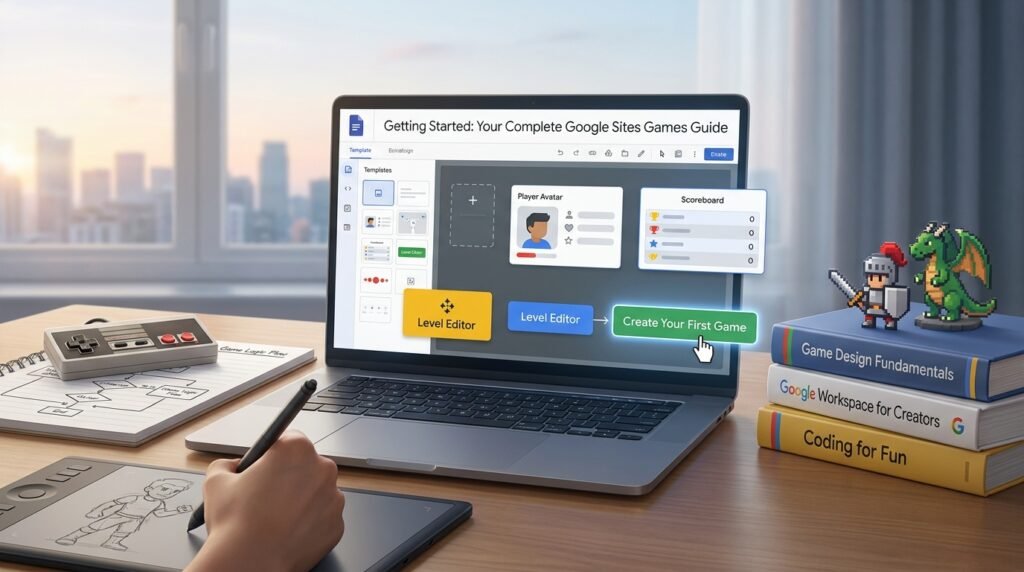
The Five-Step Launch Plan
Step One: Assess Your Team’s Needs
Start by understanding what problem you’re actually solving. Is your team disengaged? Struggling with remote connection? Experiencing high turnover? Suffering from communication breakdowns? Different problems suit different game solutions.
A disengaged team needs games that create energy and excitement. A disconnected remote team needs games that build genuine relationships. A team with communication issues needs collaborative games that practice the exact skills they’re missing. Match your game selection to your real challenge — not to what sounds good in principle.
Step Two: Choose Your First Game Carefully
Resist the temptation to launch multiple games simultaneously. One game, done well, builds the foundation for everything that follows. Two mediocre game launches simultaneously just create confusion.
Choose something simple for your first launch. How to play games on Google Sites should be immediately obvious to anyone who lands on the page. If someone needs a tutorial to understand the game, it’s too complicated for a first launch. Save complex games for when your team has established gaming habits.
Step Three: Build Your Infrastructure
Navigate to your Google Sites editor. Choose your page carefully — prominence matters. Install your chosen plugin from the Workspace Marketplace. Read permissions. Configure settings thoughtfully: difficulty, time limits, scoring approach, and access permissions.
Test everything three times on three different devices before telling anyone the game exists. Fix problems before they become first impressions. A game that works perfectly on day one builds trust. A game with obvious technical issues on day one creates doubt that persists long after the problems are fixed.
Step Four: Launch with Honest Communication
Write a message to your team that sounds like a human being wrote it. “We’ve added a quick trivia game to the team page — give it a try this week if you fancy it.” beats “As part of our employee engagement initiative, we are pleased to introduce…” every single time.
Be honest about what the game is and why you’ve introduced it. “We wanted to add something fun” is a perfectly good reason. People appreciate transparency. They’ll try something more willingly when they understand the genuine intention behind it.
Step Five: Monitor, Learn, and Evolve
Check participation after one week. Gather feedback after one month. Make adjustments based on what you hear and observe. Retire games that stop generating engagement. Introduce new options periodically to maintain freshness.
Ways to engage teams with Google Sites games evolve as your team grows and changes. What works brilliantly today might feel stale in eight months. Stay attentive. Stay flexible. The goal is sustained engagement — not a perfect one-time launch.
Quick Reference Checklist
Use this before every game launch to make sure nothing important gets missed.
Team preferences surveyed before game selection — you know what your people actually want, not what you assume they want.
Game chosen based on team needs — the selection matches the actual problem you’re solving, not just personal preference.
Plugin installed and configured correctly — difficulty, time limits, scoring, and access permissions all set intentionally.
Technical testing completed across desktop, mobile, and tablet — you’ve played the game yourself on multiple devices, and everything works.
Launch communication written in plain human language — no corporate speak, no jargon, genuine invitation rather than mandatory announcement.
Participation tracking set up — you have a simple way to monitor who’s playing and how often.
Feedback mechanism ready — a simple survey or open question that lets people tell you honestly what they think.
Review date scheduled — you’ve committed to evaluating the game’s impact after 30 days rather than just hoping for the best.
Resources for Ongoing Success
The Google Workspace Marketplace is your primary source for new games and updated plugins. Browse it quarterly rather than only when something breaks. New tools appear regularly. Some of them will be significantly better than what you’re currently using.
Online communities focused on Google Sites solutions for team connectivity exist across LinkedIn, Reddit, and specialist HR forums. People share game recommendations, troubleshooting tips, and honest feedback about what actually works in real organisations. These communities accelerate your learning considerably.
Document everything internally. Which games succeeded and why? Which flopped and why. What feedback did people give? What timing worked best? This institutional knowledge becomes invaluable when team members change and someone new needs to understand the game culture you’ve built.
Refresh your game library annually. Great games get stale. Retirement doesn’t signal failure — it signals that the game did its job and your team is ready for something new. Keep a short archive of favourites to revisit periodically. Bringing back a beloved old game after a six-month absence generates genuine excitement.
Popular Games for Online Team Building — Quick Start Options
Brain teasers and logic puzzles suit analytical teams. They reward systematic thinking. They level the playing field between seniority levels — a junior team member’s logical insight is worth the same as a director’s.
Word games and language challenges suit communication-focused teams. They’re fast, accessible, and naturally social. They generate conversation and debate in ways that purely visual puzzles don’t.
Achievement-based progression games suit goal-oriented teams. Unlocking levels, earning badges, building streaks — these mechanics mirror the goal-setting culture that high-performing teams already live by.
Collaborative challenge games suit teams that value collective success over individual recognition. Everyone contributes. Everyone shares the win. Nobody gets left behind because they happen to be less competitive by nature.
Frequently Asked Questions
How do I know which game suits my team best?
Google Sites games work best when chosen after a quick team survey. Ask what appeals to them before deciding anything yourself.
Is it hard to add games to an existing workspace?
Not at all. Google Sites games can be installed in minutes through the Workspace Marketplace. Basic configuration takes 10 to 15 minutes.
What if only a few people actually play?
Start with those few. Organic enthusiasm spreads naturally. Google Sites games grow through peer recommendation far better than through top-down announcements or mandates.
How long should a typical game session last?
Keep it short. Fifteen minutes works well for most teams. Google Sites games should fit into natural work breaks rather than requiring dedicated meeting time on already packed calendars.
Can games really improve how teams work together?
Yes, genuinely. Teams using Google Sites games regularly report stronger communication, better trust, and more comfortable collaboration across departments and seniority levels.
What about team members who simply don’t enjoy games?
Never force participation. Google Sites games work because people choose them freely. Optional engagement always outperforms mandatory fun in both quality and long-term sustainability.
How often should we introduce new games?
Quarterly refreshes work well for most teams. Google Sites games stay engaging when there’s occasional novelty. Too much change feels unstable. Too little feels stale.
Conclusion
Work is better when people actually enjoy it. That sounds obvious. Yet most organisations invest enormous energy into processes, targets, and technology whilst leaving team connection entirely to chance. Google Sites games are a simple, practical way to stop leaving that to chance.
The teams that thrive long-term aren’t necessarily the ones with the best strategy or the biggest budgets. They’re the ones where people genuinely like each other, where collaboration feels natural rather than forced. When Monday mornings don’t fill everyone with dread, Google Sites games won’t single-handedly build that culture — but they contribute meaningfully and consistently to it.
Start this week. Pick one game. Install it properly. Tell your team about it honestly. See what happens. Google Sites games work best when you treat them as a long-term investment in human connection rather than a quick fix. Give it time. Stay consistent. Your team will thank you for it.