
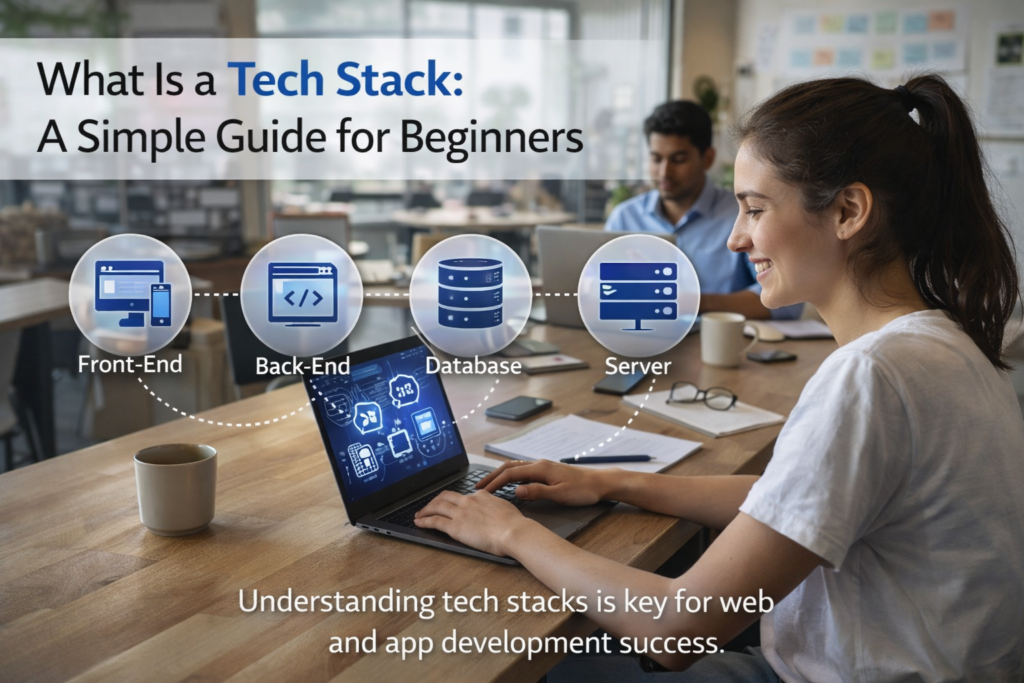
Understanding what is a tech stack is essential for anyone involved in web development, app creation, or running a tech-focused business. A technology stack combines all the tools, frameworks, and software a project needs to function. Knowing how it works helps businesses choose the right solutions and avoid costly mistakes.
Many beginners feel overwhelmed when they hear terms like software stack, full stack technology, or front-end stack. These words may seem complex, but they simply describe the layers of software that make a website or app operate smoothly. A well-planned web development stack ensures that everything from the user interface to server logic runs efficiently.
In today’s fast-paced digital world, companies rely on the right what is a tech stack to stay competitive. Understanding how tech stack works, its components, and the benefits of a carefully chosen stack can save time, money, and resources while improving performance and user satisfaction.
What Is a Tech Stack and Why It’s Important for Your Business
A tech stack is the combination of software, frameworks, and programming tools used to build a digital product. It includes everything from the what is a tech stack that users interact with to the back-end stack that powers the system behind the scenes. Businesses of all sizes, from startups to enterprises, rely on the right technology stack to maintain efficiency, scalability, and innovation.
Understanding how tech stack works is key to making informed decisions. For instance, a cloud tech stack can enhance flexibility and reduce infrastructure costs. Companies that ignore software architecture risk running into performance bottlenecks and security issues. Modern organisations often use a combination of app tech stack, IT stack, and development tools to meet their unique needs. Choosing the right full stack technology can improve team collaboration, speed up development, and ensure long-term success.
Startups benefit particularly from selecting the best tech stack for web apps. An efficient software stack can accelerate time-to-market while giving businesses room to grow and adapt to new challenges.
Key Components of a Tech Stack Every Developer Should Know
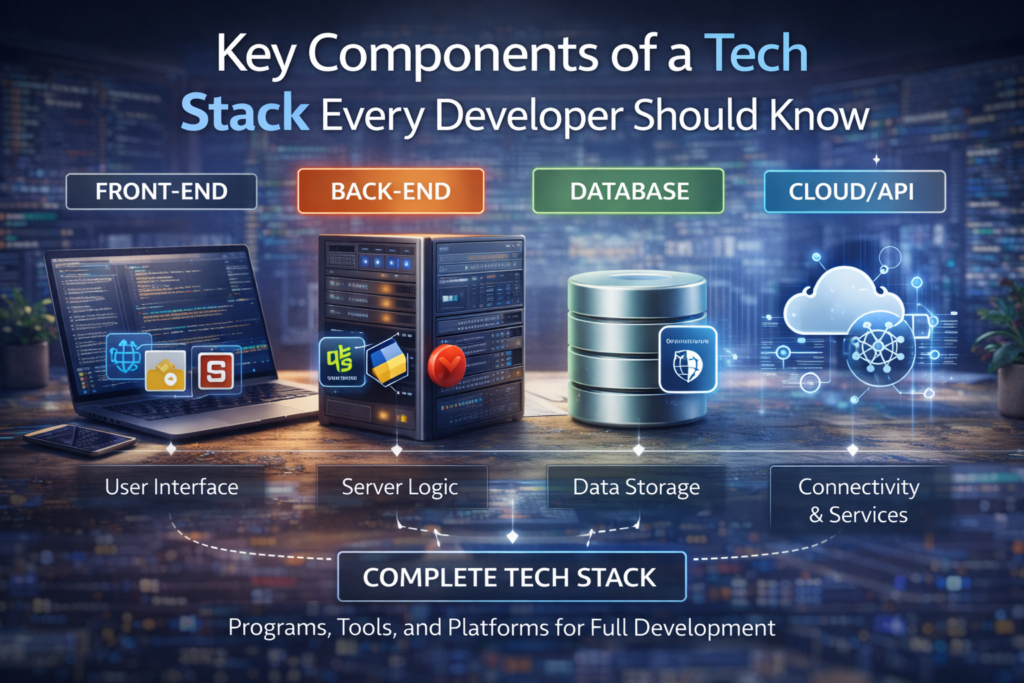
Every what is a tech stack has multiple layers, each playing a vital role. The front-end stack includes elements like HTML, CSS, and JavaScript frameworks that users interact with directly. The back-end stack manages databases, servers, and application logic. Combining both creates a seamless experience for users.
Developers also rely on programming stack choices and software tools for development to simplify coding and collaboration. Components such as cloud platforms, APIs, and databases are essential. Understanding components of a tech stack helps teams integrate tools effectively, avoid compatibility issues, and optimise performance.
A strong full stack technology approach ensures smooth communication between layers. Knowing the programming languages in tech stack and the modern tech stack trends allows developers to make informed decisions and adopt scalable solutions. For example, using a web development stack that integrates React for front-end and Node.js for back-end can improve speed and maintainability.
How a Tech Stack Impacts Website and App Performance
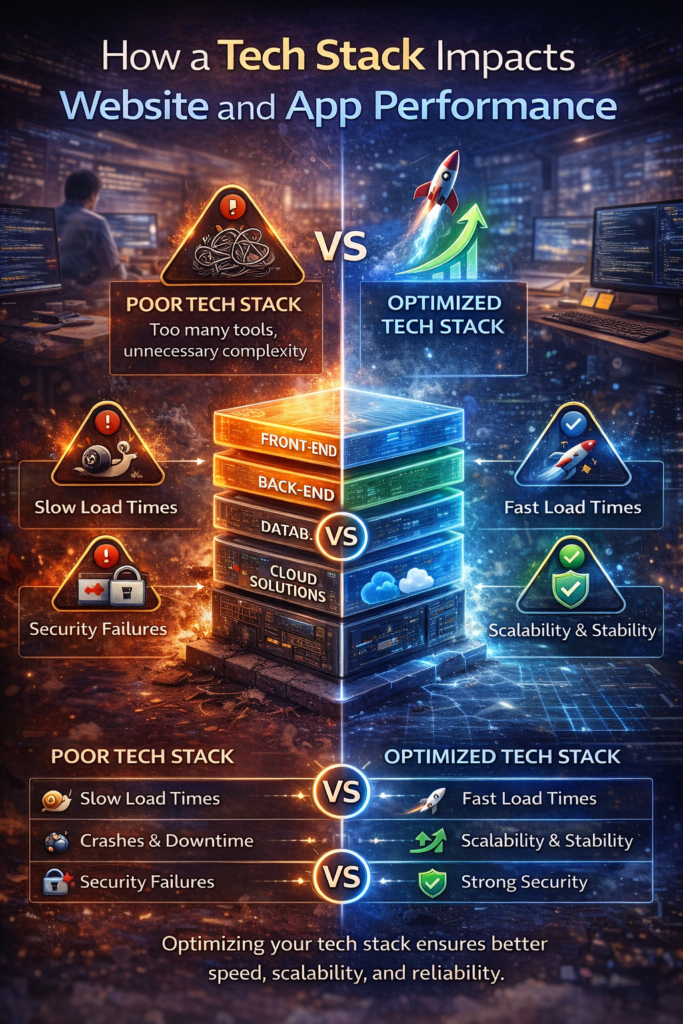
The right what is a tech stack directly affects website and app performance. A poorly chosen software stack can slow load times, cause crashes, or create security vulnerabilities. On the other hand, a well-planned app tech stack improves speed, scalability, and user experience.
Performance depends on each layer of the IT stack. Optimised front-end stack design makes pages load faster, while a robust back-end stack ensures data is processed efficiently. Cloud solutions within a cloud tech stack reduce server load and improve uptime. Understanding tech stack layers and their interaction is essential for reliable, high-performing applications.
Businesses often compare multiple options with tech stack comparison to identify the best fit. Choosing a modern tech stack keeps projects future-proof and aligned with evolving industry standards.
Popular Tech Stack Examples Used by Top Companies
Many leading companies demonstrate the impact of the right tech stack examples. For instance, Facebook uses a combination of React (front-end stack), PHP (back-end stack), and MySQL databases. Netflix leverages a cloud tech stack for global streaming, while Spotify relies on a mix of Python and Java for its software stack.
Here’s a simplified table of popular tech stacks used by top companies:
| Company | Front-End Stack | Back-End Stack | Cloud / Tools |
| React | PHP | MySQL, Hadoop | |
| Netflix | Node.js | Java | AWS Cloud |
| Spotify | JavaScript | Python | Google Cloud |
| Airbnb | React | Ruby on Rails | AWS, GraphQL |
These examples show the versatility of a full stack technology approach. Knowing popular tech stacks helps beginners and businesses decide which software stack suits their needs.
Choosing the Right Tech Stack for Your Project Needs
Selecting the right tech stack requires careful consideration. Start by analysing project goals, team expertise, and future scalability. Using what is a tech stack or enterprise-level projects involves different priorities, but the principles remain similar.
Begin with a tech stack overview, assessing development tools, programming languages in tech stack, and frameworks. Compare options using tech stack comparison and evaluate benefits of a tech stack like speed, cost efficiency, and maintainability. For example, choosing a web development stack with Node.js for back-end and React for front-end may suit dynamic web applications, while simpler projects may thrive on Python-Django stacks.
Ultimately, the right software stack accelerates development, reduces errors, and ensures long-term project success. Thoughtful building a tech stack and selecting technology for projects avoids common pitfalls.
Common Mistakes to Avoid When Building a Tech Stack
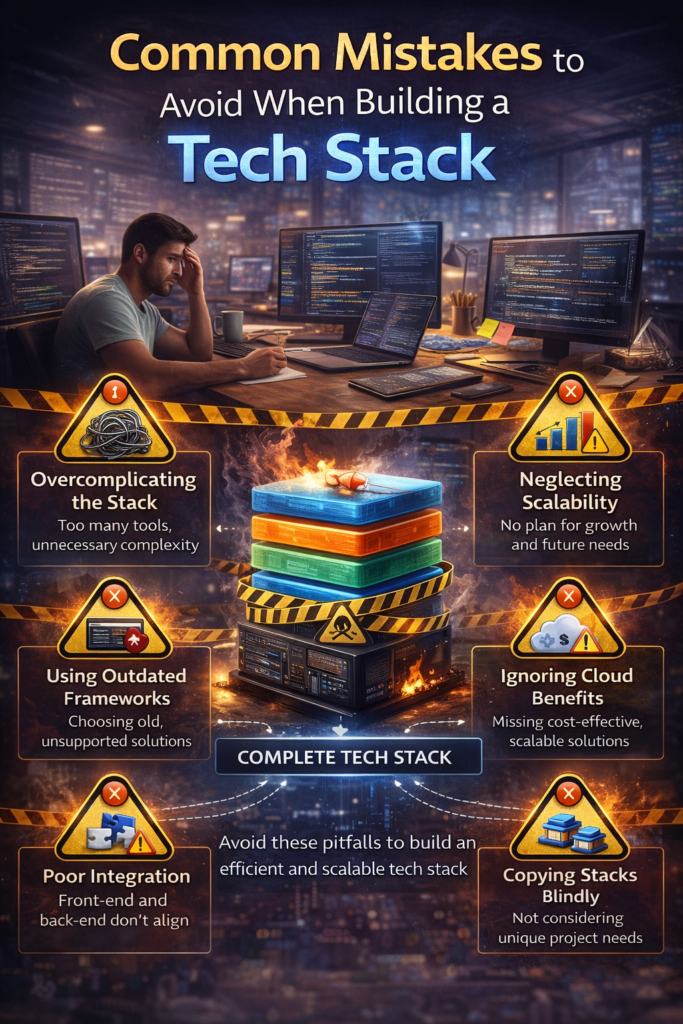
Even experienced teams can make mistakes when developing a what is a tech stack . One common error is overcomplicating the software stack with unnecessary tools. Another is neglecting tech stack layers or choosing outdated frameworks. These missteps affect performance, security, and team efficiency.
Failing to plan for scalability or ignoring cloud tech stack benefits often leads to high costs later. Similarly, neglecting full stack technology integration causes friction between front-end and back-end operations. Teams should avoid copying stacks blindly without considering project-specific requirements or ignoring programming stack compatibility.
Learning from these mistakes ensures your tech stack remains efficient and future-ready. Thoughtful selection and maintenance of modern tech stack elements will enhance performance and deliver a seamless user experience.
FAQs
What does a tech stack include?
A tech stack combines software, frameworks, and development tools that power websites or apps. It includes both front-end and back-end technologies for smooth performance.
Why is a tech stack important for businesses?
Choosing the right stack improves speed, scalability, and security. It ensures projects run efficiently while saving time, money, and resources for startups and enterprises alike.
How does a tech stack work?
A stack connects front-end, back-end, and database layers. Each component communicates seamlessly, ensuring apps or websites load quickly and function correctly for all users.
What are the main layers in a tech stack?
Most stacks have front-end, back-end, database, and cloud layers. Each layer handles specific tasks to make software responsive, secure, and easy to maintain over time.
How do companies choose the right stack?
Businesses consider project goals, team skills, budget, and future scalability. Comparing tools, programming languages, and frameworks ensures the selected stack meets all project requirements.
Can a tech stack affect app performance?
Yes, a poorly chosen stack can slow load times and cause crashes. The right combination boosts speed, reliability, and user experience for web apps and mobile applications.
What are examples of popular tech stacks?
Top companies use stacks like React with Node.js or Python-Django. Popular choices combine front-end and back-end frameworks with cloud services for maximum efficiency and scalability.
Conclusion
Understanding what is a tech stack is essential for anyone building websites, apps, or digital platforms. A well-chosen technology stack simplifies development, improves performance, and reduces costs. Using the right software stack ensures your project runs smoothly and scales efficiently.
Knowing what is a tech stack , including the components of a tech stack and programming languages in tech stack, helps you make informed decisions. Choosing a full stack technology approach, analyzing tech stack examples, and learning from past mistakes can save businesses time and resources. Whether you are a startup or an enterprise, selecting the best what is a tech stack and understanding its benefits will improve outcomes. Evaluating app tech stack, web development stack, and IT stack ensures your projects remain secure, fast, and future-proof.
What Is Tech Sales and Why It’s One of the Fastest-Growing Roles explained with career paths, and skills for beginners and professionals.